
Planning accommodations for a remote construction, oil and gas, or industrial project involves more than determining how many workers need a place to stay. Site accessibility, available utilities, workforce requirements, project timelines, and ongoing maintenance can all influence how successfully a remote camp operates.
For project managers working across Alberta and Western Canada, remote workforce housing provides a practical way to accommodate crews in locations where traditional housing options may be limited or unavailable.
However, choosing the right modular housing solutions requires careful planning. From selecting the appropriate buildings to preparing for future changes, several important factors should be considered before installation begins.
Here’s what project managers should know when planning modular accommodations for remote and industrial sites.
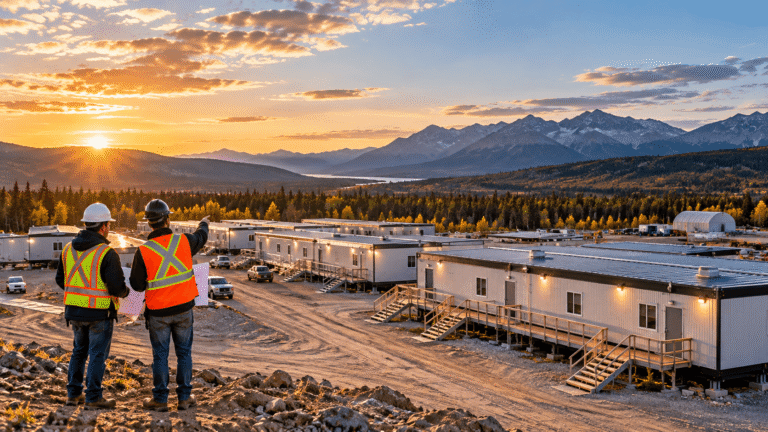
What Should You Consider Before Choosing Remote Workforce Housing?
Every remote project has different requirements. A temporary construction site with a small crew may need a very different setup than a large industrial operation supporting workers over several years.
Before selecting remote workforce housing, project managers should evaluate the following:
- Workforce size: How many employees will require accommodations, and could that number change?
- Project duration: Will the facilities be needed for several months, multiple years, or longer?
- Site accessibility: Can modular units and installation equipment safely reach the location?
- Available infrastructure: What electrical, water, sewer, and other utility connections are available?
- Supporting facilities: Will the site require offices, washcars, kitchens, dining areas, or additional operational spaces?
- Future requirements: Could the buildings need to be expanded, reconfigured, relocated, or reused?
Addressing these questions early helps establish a clearer scope for the project and reduces the likelihood of unexpected changes during installation.
For those new to modular accommodations, our guide to workforce camps and modular housing solutions provides an overview of how these facilities support remote industrial operations.
Choosing the Right Modular Workforce Housing Configuration
One of the advantages of modular workforce housing is the ability to configure individual buildings around a project’s specific requirements.
Rather than relying on a fixed building layout, modular units can be arranged and connected to create accommodations and supporting facilities that suit the workforce and site conditions.
However, choosing the right configuration involves more than simply selecting the number of units.
Matching Facilities to Project Requirements
Project Consideration
Modular Housing Planning Considerations
Workforce Size
Determine the number of accommodation units required and allow for potential changes.
Project Duration
Consider long-term durability, maintenance access, and possible future renovations.
Site Layout
Plan unit placement, walkways, access routes, and connections between buildings.
Utilities
Assess electrical, plumbing, heating, cooling, water, and sewer requirements.
Supporting Facilities
Identify the need for offices, kitchens, dining areas, washcars, and other spaces.
Future Expansion
Consider whether additional units may need to be connected or existing spaces reconfigured.
Project Completion
Plan for eventual dismantling, transportation, relocation, or reuse.
A well-planned layout can help create a more functional environment for workers while making it easier to manage the buildings throughout the project.
For example, connecting modular units through interior or exterior corridors may create a more cohesive workspace or camp configuration.
High Gear Modular provides modular renovation and unit connection services to help adapt existing buildings to changing operational needs.
Site Preparation and Installation Requirements for Remote Modular Camps
Remote locations often present challenges that aren’t encountered on conventional urban construction sites.
Before modular units arrive, project managers need to consider how the buildings will be transported, positioned, installed, and connected to the infrastructure required for operation.
Site Access and Ground Conditions
The size and location of a project can affect transportation and installation logistics.
Access roads, terrain, available space, and ground conditions should be evaluated before scheduling the delivery of modular units.
Proper planning helps ensure there is sufficient room for transportation vehicles, installation equipment, and the positioning of individual buildings.
Building Placement and Levelling
Once units arrive, they must be positioned, blocked, and levelled according to the project requirements.
Accurate placement is particularly important when multiple modular units need to be connected or integrated into a larger facility.
Utility Connections and Building Integration
Depending on the site and unit configuration, installation may involve electrical, plumbing, heating, air conditioning, and other essential connections.
Walkways, corridors, and interior or exterior finishing may also be required to create a functional facility.
These are important considerations when planning remote workforce accommodation, particularly where access to additional contractors or equipment may be limited.
Working with an experienced modular installation and dismantling contractor can help project teams coordinate the different stages of setup.
Planning for Changing Workforce Needs
Industrial and construction projects rarely remain exactly the same from beginning to end.
Workforce numbers may increase during peak construction periods, decrease as a project approaches completion, or shift as operational requirements change.
This is where modular camps offer valuable flexibility.
Depending on the buildings and site conditions, existing facilities may be adapted through:
- Adding modular units: Expanding accommodations or operational spaces as workforce requirements grow.
- Reconfiguring interiors: Adjusting room layouts to accommodate different uses.
- Connecting buildings: Creating corridors and walkways between existing modular units.
- Renovating existing spaces: Updating interiors or improving functionality without replacing entire buildings.
- Relocating units: Moving suitable buildings to different areas of a site or preparing them for another project.
For project managers, considering these possibilities during the initial planning stage can help avoid unnecessary complications later.
Instead of viewing modular buildings as fixed structures, it can be useful to consider how they may support different stages of the project.
Maintenance and Repairs at Remote Industrial Sites
Planning remote workforce housing shouldn’t end once the buildings are installed and operational.
Modular buildings experience regular wear, particularly in demanding industrial environments where facilities may be used continuously and exposed to challenging weather conditions.
As a result, maintenance planning should be part of the overall project strategy.
Why Maintenance Planning Matters
Remote locations can make building repairs more complicated.
An issue that might be relatively straightforward to address in an urban setting can become more disruptive when replacement materials, equipment, or service crews must travel significant distances.
Project managers should consider:
- How regularly modular buildings will be inspected
- Who will handle repairs and service calls
- Whether replacement materials or equipment are readily available
- How quickly repairs can be coordinated
- Whether existing units may require renovations during the project
Common concerns can include roof leaks, damaged interiors, issues with doors or windows, and units that require re-levelling.
Addressing maintenance needs early can help reduce avoidable disruptions and extend the useful life of modular buildings.
For additional guidance, read our article on common modular building repairs and how to avoid costly downtime.
High Gear Modular also provides modular trailer repairs and service calls throughout Western Canada.
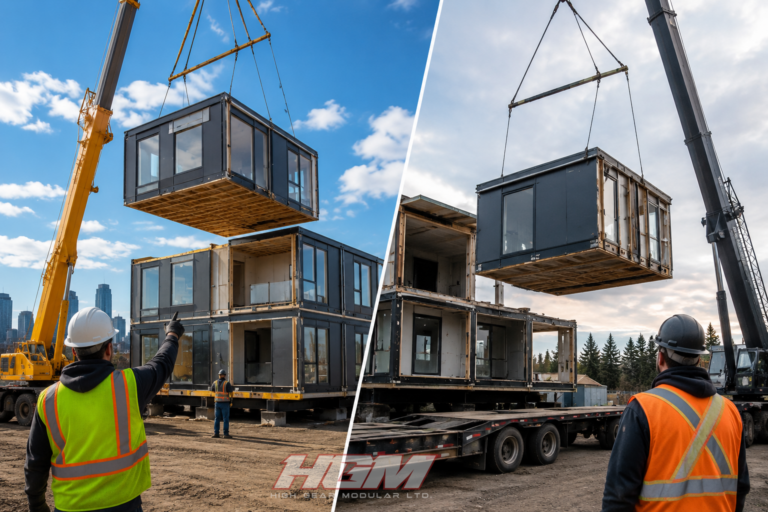
What Happens to Modular Housing After the Project Ends?
One important consideration when selecting modular workforce housing is what will happen to the buildings once the original project is completed.
Unlike permanent structures, suitable modular units can often be dismantled, transported, and installed at another location.
This makes it possible for companies to consider how their modular assets may support future projects.
Depending on the condition and configuration of the buildings, options may include:
Dismantling and Relocation
Modular units can be disconnected, dismantled, and prepared for transportation to another site.
Renovation and Reconfiguration
Existing buildings may be updated or modified to accommodate different operational requirements before being reused.
Continued Use at the Existing Site
Some facilities may remain in place to support ongoing operations or future project phases.
Considering these possibilities early helps project managers make more informed decisions about installation, unit configuration, and long-term planning.
For a closer look at the differences between these processes, explore our guide to modular installation versus modular dismantling.
Why Experience Matters When Planning Remote Workforce Accommodation
Coordinating modular buildings in remote locations requires careful attention to logistics, installation, utility connections, maintenance, and project timelines.
Working with experienced modular construction professionals can help simplify that process.
Rather than treating installation, renovations, repairs, and dismantling as unrelated services, project managers can benefit from considering how each stage affects the next.
This is particularly important for remote workforce accommodation, where unexpected delays or building issues can be more difficult to resolve.
With over 30 years of experience and more than 28,000 modular jobs completed, High Gear Modular understands the practical requirements of supporting modular projects across Alberta and Western Canada.
Our team provides installation and dismantling, repairs and service calls, and renovations for workforce camps, portable offices, schools, and other modular facilities.
Learn more about why experience matters in modular construction and how it can influence project execution.
Frequently Asked Questions About Planning Remote Workforce Housing
Important considerations include workforce size, project duration, site accessibility, available utilities, building configurations, maintenance requirements, and potential future relocation. Planning for the entire project lifecycle can help reduce unexpected complications.
Yes. Depending on the buildings and site conditions, additional modular units can often be installed and connected to existing facilities. Interior renovations and reconfigurations may also help accommodate changing workforce requirements.
Installation typically involves transporting units to the location, positioning and levelling the buildings, completing required utility connections, and integrating individual units into the overall site configuration. The exact process depends on the project and building requirements.
Maintenance requirements depend on the buildings, site conditions, and frequency of use. Regular inspections and access to professional repair services can help address issues involving roofing, doors, windows, interiors, levelling, and other building components.
In many cases, yes. Suitable modular buildings can be dismantled, transported, and installed at another site. Their condition, configuration, and the requirements of the new location should be assessed before relocation.
Modular housing solutions can support oil and gas operations, including remote industrial sites where traditional accommodations are limited. They can provide sleeping quarters and supporting facilities, with layouts adapted to the needs of individual projects, including oilfield camps.
Key Takeaways
- Remote workforce housing requires careful planning beyond simply selecting accommodation units.
- Workforce size, project duration, site accessibility, utilities, and supporting facilities should all influence the initial configuration.
- Modular construction provides opportunities to expand, renovate, reconfigure, and relocate suitable buildings as project requirements change.
- Maintenance and repair planning are particularly important for remote industrial sites.
- Considering installation, ongoing operations, and eventual dismantling together can help project managers make better long-term decisions.
Planning Remote Workforce Housing in Western Canada?
Whether you’re preparing accommodations for a new industrial project, expanding an existing modular camp, or planning to relocate units to another site, experienced modular support can make a difference.
High Gear Modular provides modular installation and dismantling, repairs and service calls, and renovations throughout Alberta and Western Canada.
With decades of experience supporting modular construction projects, our team understands the importance of practical planning, reliable communication, and quality workmanship.
Planning a remote workforce housing project? Contact High Gear Modular to discuss your site requirements and how our team can support your next project.