
Remote construction, oil and gas, infrastructure, and industrial projects often require crews to work far from established communities. When hotels, housing, and essential facilities aren’t readily available, workforce camps provide the infrastructure needed to keep people housed and operations moving.
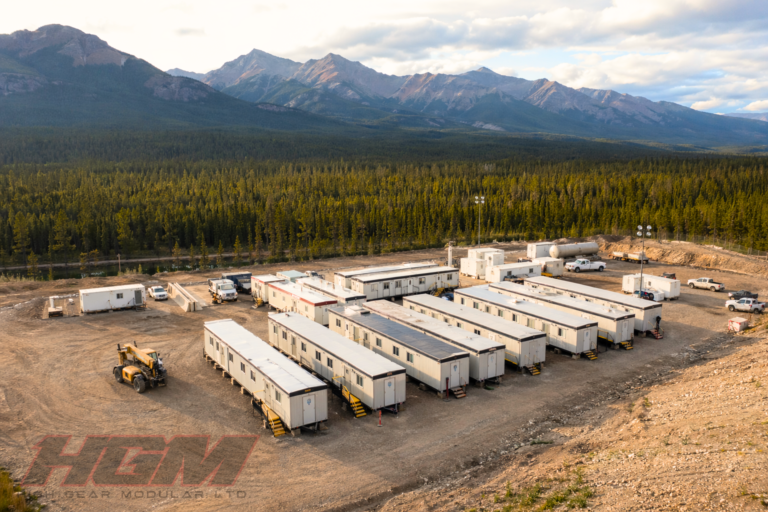
Modern workforce camps can include much more than sleeping accommodations. Using modular construction, companies can create complete temporary or semi-permanent facilities with offices, kitchens, lunchrooms, washcars, lavatories, and other essential spaces.
For projects throughout Western Canada, modular camps offer a flexible way to establish workforce accommodation in remote locations while adapting to changing project requirements.
What Is a Workforce Camp?
A workforce camp is a temporary or semi-permanent facility designed to provide accommodation and essential services for employees working at remote industrial, construction, or resource sites.
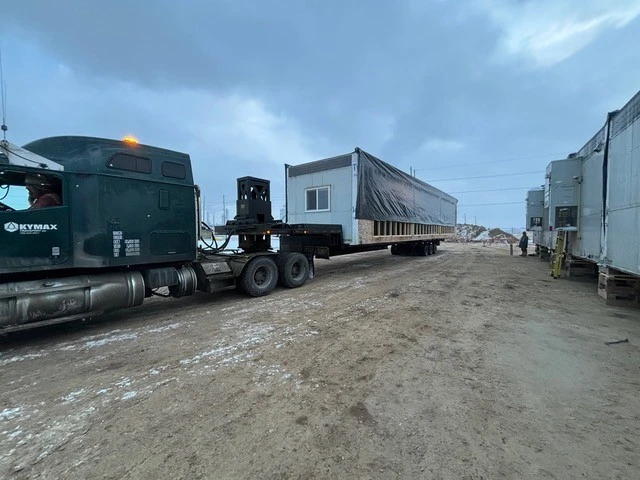
Modular workforce camps are assembled using prefabricated units that can be transported to the project site, installed, connected to utilities, maintained throughout the project, and dismantled or relocated when they’re no longer required.
Depending on the operation, a workforce camp may include:
- Sleeping accommodations
- Portable offices
- Kitchens and dining facilities
- Lunchrooms
- Washcars and lavatories
- Recreation or common areas
- Administrative buildings
- Storage and support facilities
This flexibility makes modular workforce accommodation particularly well suited to projects where the number of workers, site requirements, or project duration may change.
Workforce Camps at a Glance
Project Need
How Modular Camps Help
Remote location
Facilities can be transported and installed on site
Tight project schedule
Prefabricated units allow faster site deployment
Changing workforce size
Additional modular units can be added or reconfigured
Essential services
Offices, washcars, kitchens and other facilities can be integrated
Temporary project
Units can be dismantled and relocated when work is complete
Harsh environments
Units can be prepared for demanding site and weather conditions
Why Are Modular Camps Used on Remote and Industrial Projects?
Remote projects present logistical challenges that don’t exist on conventional urban job sites.
Workers may need to remain on site for extended rotations, while project managers need reliable facilities that can be installed efficiently without creating unnecessary delays.
Modular camps help solve this problem by bringing essential infrastructure directly to the workforce.
For oil and gas, construction, infrastructure, and other industrial operations, the benefits can include:
- Faster deployment compared with building permanent facilities on site
- Flexible layouts based on workforce requirements
- Ability to expand or reconfigure facilities
- Centralized accommodation and operational spaces
- Relocation and reuse between projects
- Reduced disruption when properly planned and installed
For project managers, that flexibility can be particularly valuable when operating in remote areas of Alberta and Western Canada.
What Goes Into Setting Up a Modular Workforce Camp?
A successful workforce camp requires more than transporting trailers to a site. Each component must work together as part of a safe, functional facility.
1. Site Planning and Preparation
Access, terrain, drainage, foundations, unit placement, and utility requirements need to be considered before installation begins.
2. Delivery and Placement
Modular units are transported to the site, staged, positioned, levelled, and secured according to the project layout.
3. Utility Connections
Depending on the facility, units may require electrical, plumbing, water, sewer, heating, and air-conditioning connections.
4. Finishing and Integration
Skirting, insulation, walkways, connections between units, and interior or exterior finishing help turn individual modules into a cohesive facility.
5. Ongoing Repairs and Maintenance
Remote facilities experience regular wear and demanding environmental conditions. Timely modular building repairs can help prevent small problems from becoming operational disruptions.
6. Dismantling and Relocation
When a project ends, modular units can be safely disconnected, dismantled, prepared for transport, and potentially reused at another location.
What Should Project Managers Consider When Planning Workforce Accommodation?
The right workforce accommodation solution depends on more than the number of workers who need housing.
Project managers should also consider:
- How long will the camp be required?
- How remote is the project location?
- What utilities are available on site?
- Which support facilities will workers require?
- Will the workforce increase or decrease during the project?
- Could the units be reused at another site?
- Who will handle repairs and service calls during operation?
- How will the camp be dismantled when the project ends?
Considering the entire lifecycle early can make it easier to control costs, coordinate contractors, and avoid unexpected delays.
For a closer look at the key considerations involved in planning remote workforce housing, explore our guide to site preparation, modular configurations, maintenance, and long-term flexibility.
Why Full-Lifecycle Modular Support Matters
One of the biggest advantages of modular construction is that buildings aren’t necessarily tied to one location or one purpose.
A portable office used on one construction project may later be relocated. A modular camp may need additional units as the workforce grows. Existing buildings may require renovations or repairs before their next deployment.
Working with an experienced modular contractor that can support installation, repairs, renovations, dismantling, and relocation simplifies that lifecycle.
Instead of treating each stage as an unrelated project, companies can plan their modular assets around both their immediate needs and what comes next.
FAQs About Workforce Camps
Workforce camps are commonly used by oil and gas, construction, mining, infrastructure, energy, and other industries operating in remote locations.
The exact configuration varies, but modular camps can include accommodations, offices, kitchens, dining areas, washcars, lavatories, storage, and other support facilities.
Yes. One advantage of modular construction is flexibility. Depending on the existing configuration and site conditions, additional units can be incorporated as workforce or operational requirements change.
Yes. Modular buildings can often be dismantled, transported, and installed at another location, provided the units remain suitable for relocation.
Experienced modular service contractors can provide on-site repairs for issues involving roofing, windows, interiors, unit levelling, utilities, steps, landings, and other modular building components.
Key Takeaways
- Workforce camps provide housing and essential facilities for crews operating in remote locations.
- Modular camps can include accommodations, offices, kitchens, washcars, lunchrooms, and other operational spaces.
- Modular construction allows facilities to be expanded, reconfigured, dismantled, and relocated as project requirements change.
- Installation, utility integration, maintenance, and eventual dismantling should be considered during initial project planning.
- Full-lifecycle modular support can reduce coordination requirements and help keep remote projects operating efficiently.
Supporting Remote Projects Across Western Canada
Successful workforce accommodation isn’t simply about providing somewhere for crews to stay. It’s about creating a reliable site environment that supports the people and operations behind the project.
High Gear Modular has decades of experience supporting workforce camps, portable offices, site trailers, and modular buildings across Alberta and Western Canada. From installation and utility integration to repairs, renovations, dismantling, and relocation, our team helps keep modular facilities operational throughout their lifecycle.
Whether you’re preparing a new remote site, expanding an existing camp, or planning for the next stage of a project, experienced modular support can make the process significantly easier.
Planning a workforce camp or remote modular project? Contact High Gear Modular to discuss your site requirements.